See our latest projects and be updated with recent news and features
happening in the world of pneumatic conveying, materials handling
and industrial vacuum systems.


Thursday, May 21, 2026
Industrial vacuum system design is required for every proposed installation because each setting has unique operating conditions, material characteristics, process requirements and site constraints. Factors such as the type and volume of material being collected, distances, pipe routing, dust properties, collection points, airflow requirements and safety considerations all influence system performance.
A professional design ensures the vacuum system provides adequate suction, maintains efficient material transport, minimises blockages and wear and complies with relevant safety and environmental standards. It also helps reduce operating costs, improve reliability, extend equipment life and ensure the system meets all specified requirements.
There is no universal or generic system that can fulfil the vacuuming requirements of every industrial setting. They are used to handle a wide range of dry granular solids and low-viscosity fluids, each with unique characteristics and handling requirements. As a result, a professionally designed solution must be developed to suit three major aspects of each bespoke project:
Developing an effective bespoke solution requires a thorough approach to all these major project aspects and intrinsic design factors. We will begin this overview by looking at the first and most critical step, which involves evaluating your everyday operational requirements.

Overview on industrial vacuum system design with some notable best practices
Successful industrial vacuum system design begins with a detailed analysis of your specific cleaning objectives and material handling requirements. Our engineering team evaluates these operational variables to ensure the vacuum power unit and hose configurations are properly matched to the physical demands of your industrial setting.
The volume of material to be collected dictates the diameter of the hoses and vacuuming tools required for a particular installation. Selecting the correct tool size is a critical step in determining the required capacity of the central vacuum power unit. Designers must balance hose diameter against the material's weight, particle size and flow characteristics to ensure efficient transport, minimise blockages and maintain reliable system performance.
| Industrial setting | Typical application | Suitable hose diameter |
|---|---|---|
| Light-duty cleaning | Fine dust removal in electronics and laboratory settings | 32 mm |
| Standard industrial | General workshop floor cleaning and debris removal | 38 mm |
| Heavy-duty recovery | Bulk material spill recovery and transport of large granular solids | 50 mm |
Suitable vacuum hose diameters for industrial settings table
Consider a commercial bakery in Victoria that needs to clean up fine flour dust around its mixing area. This facility would use a 32 mm hose to maintain the high suction levels required to capture very light particles.
In contrast, a regional grain terminal in Western Australia handles much heavier materials and would require a larger 50 mm hose. The wider diameter allows bulk quantities of wheat or barley to pass through the system without causing blockages.
Selecting the correct hose size ensures the vacuum system has sufficient capacity to efficiently transport the specific material being collected.
Central vacuum systems also offer a significant productivity advantage over traditional cleaning methods, removing dust and debris much faster than manual sweeping across large areas. The total number of vacuum inlets installed for the industrial setting has very little impact on the required size of the central vacuum power unit.
Instead, the design needs to focus on the number of inlets that will be used simultaneously during normal operations. This concurrent usage determines the system's airflow requirements and the total suction capacity needed for the installation.
A regional grain terminal may install thirty inlets to ensure a vacuum connection point is conveniently located near each grain elevator. However, the system only requires sufficient capacity for four operators if no more than four people are expected to vacuum at the same time. This approach reduces initial capital costs while ensuring every active user receives full suction performance.
A single operator can typically clean 280 square metres of smooth flooring per hour when using an optimised central vacuum system. Obstructions or rougher floor surfaces may reduce this rate to approximately 186 square metres per hour per operator. Accurate estimation of the cleaning area ensures that power units are correctly sized and positioned to provide consistent suction throughout the facility.
| Floor condition | Cleaning rate per operator | Suitable nozzle |
|---|---|---|
| Smooth and unobstructed | 280 square metres per hour | Standard floor heads |
| Rough or obstructed | 186 square metres per hour | Specialised suction heads |
Estimated industrial vacuum cleaning rates for different surface types table
Pharmaceutical laboratories feature wide and open production bays that allow for a maximum cleaning rate of 280 square metres per hour. Operators move quickly across these smooth surfaces to maintain a sterile environment without physical obstacles or tight corners.
In contrast, a regional grain terminal contains narrow conveyor galleries and structural supports that significantly slow the cleaning process. Workers in these agricultural settings would be expected to achieve a rate of only 186 square metres per hour while navigating around heavy machinery and elevator pits.
It is clear the industrial vacuum system design needs to address this productivity gap by placing vacuum inlets closer together in complex grain terminals to reduce hose drag. These differences in operating speed may require a higher number of simultaneous operators to ensure the facility remains clean within maintenance windows. Proper planning ensures that both a given laboratory or terminal achieve the same level of hygiene despite their differing physical layouts.

Industrial vacuuming operational requirements
Effective system design is a strategic balancing act between overcoming a facility's physical constraints and maximising cost efficiency. There is no universal solution because the specific layout of your facility directly impacts worker productivity.
Consider the difference between an open pharmaceutical laboratory and a complex environment with heavy machinery. Open pharmaceutical laboratories allow for rapid cleaning, but complex environments with narrow galleries or heavy machinery significantly slow the process down. A custom design solves this by placing vacuum inlets closer together to reduce hose drag, helping your team maintain required hygiene standards even during strict maintenance windows
Expert planning prevents over-engineering and helps reduce initial capital and operating costs. By accurately evaluating the true number of concurrent users, such as powering only four simultaneous operators across a network of thirty installed inlets at a grain terminal, a customised system guarantees reliable, consistent suction without unnecessary expense.
Every industrial setting presents unique operating conditions, material characteristics and site constraints. A tailored approach is the only way to achieve this optimal balance for every proposed installation.
Poor vacuum system layout can reduce efficiency, increase blockages and disrupt operations. Learn how site structure influences installation success and read about Structure and layout considerations when fitting to various industrial settings.
Preventing blockages and pipe wear starts with understanding the materials your vacuum system must handle. Learn the key design factors that improve efficiency and extend system life and read about Intrinsic properties to prevent blockages and minimise wear.
Successful industrial vacuum system design begins with a detailed analysis of your specific cleaning objectives and material handling requirements. To ensure your vacuum power unit and hose configurations are perfectly matched to the physical demands of your industrial setting, contact the expert team at Pneuvay Engineering.
Contact us to discuss industrial vacuum system requirements today.  Feel free to call on 1300721458 or contact us. You can even send us a message via our LinkedIn if you like.
Get social with us and see the latest news items from:
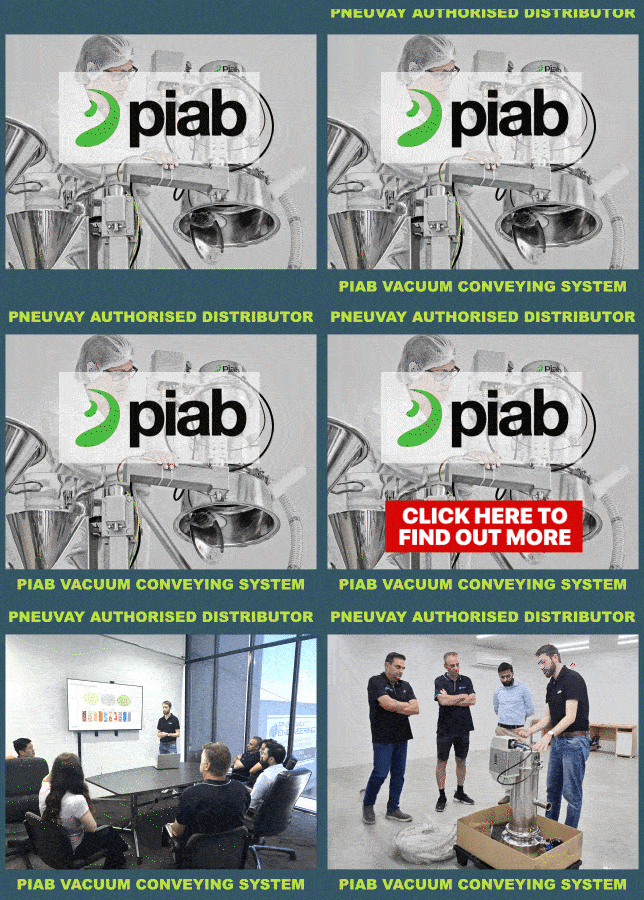
Pneuvay Engineering has been granted PIAB distributor for Australia and now delivers vacuum conveying systems, offering high-performance solutions for bulk powders and materials.
Learn how this strategic development benefits our local industry.
Pipe and Tube Compression Couplings
Industrial Dust Collectors Systems
Dust Collectors Filters, Cartridges and Bags


